

Working with Your Dog’s Drive
What does it mean to work with your dog’s drive?
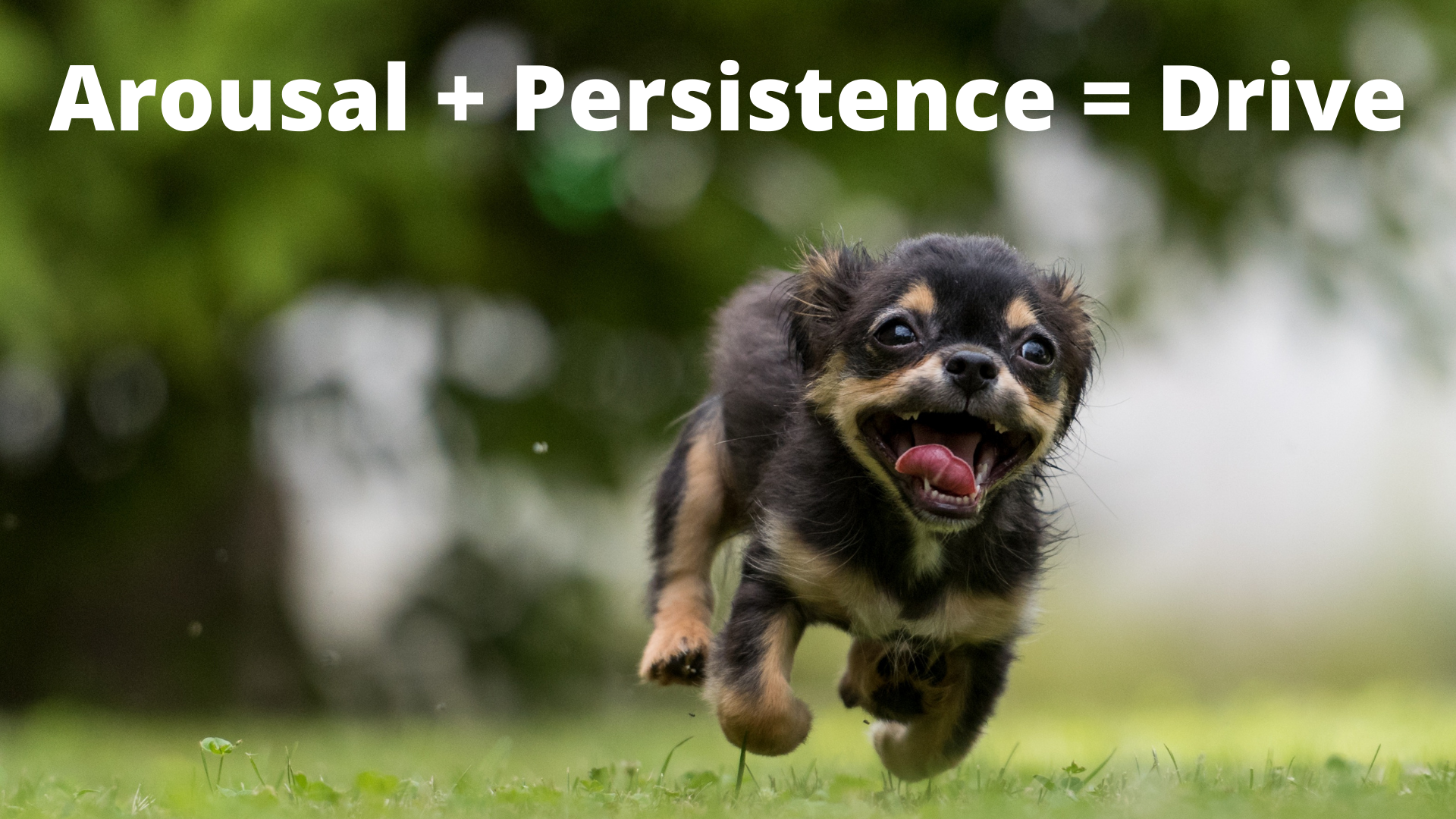
First, you want to identify what most motivates your dog. Think about the things that naturally capture their attention—food, movement, prey, toys, or interaction. When your dog encounters one of these stimuli, observe two things: arousal and persistence.
Arousal is the level of excitement your dog shows in response to the stimulus. Persistence is how long they stay engaged with it—the “annoying” way they can obsess over something!
As you explore different motivators, take note of both. How quickly does your dog light up? And how long do they stay interested?
Different Types of Drive
Some dogs are more food-driven. Others are more motivated by prey or hunting instincts. And some dogs are highly driven by play.
Dogs with strong prey drive will often have very specific preferences. One dog may fixate on squirrels or chipmunks, while another is drawn to the flutter of birds. Some dogs are tuned into larger prey—cats, deer, skunks, even horses.
Then there are dogs who are persistent about play above all else.
Becoming the Reward
If your dog finds play most rewarding, then you need to become the most playful “dog” in the environment.
If your dog is driven by prey—then you become the prey.
The interesting thing is that play and prey are closely related. Both involve chasing and being chased. In many ways, play is simply a socially acceptable version of hunting behavior.
One of the biggest things I have to coach people on is this: run away from your dog.
Most people instinctively move toward their dog, which creates social pressure. It puts the dog in a position where they feel like the object—and in hunting terms, the object is the prey.
Instead, when you move away, you activate their natural instincts. You invite engagement rather than demand it.
How to Engage Drive
Work on being soft in your body. Stay loose. Move with lightness. Run away, rather than closing in.
Your goal is to attract your dog’s prey and play drive—not suppress it.
For food-driven dogs, always have food ready. For dogs who love play or prey, keep a toy on hand and be prepared to bring it to life. Movement, energy, and timing matter here.
You are not just delivering rewards—you are becoming part of the experience your dog wants.
Knowing Your Dog
So, do you have a high-drive dog or a low-drive dog?
How do you know?
Watch how they express arousal. Notice their persistence. See what they return to again and again, even when distractions are present.
Your dog will tell you what matters to them—you just have to pay attention.